
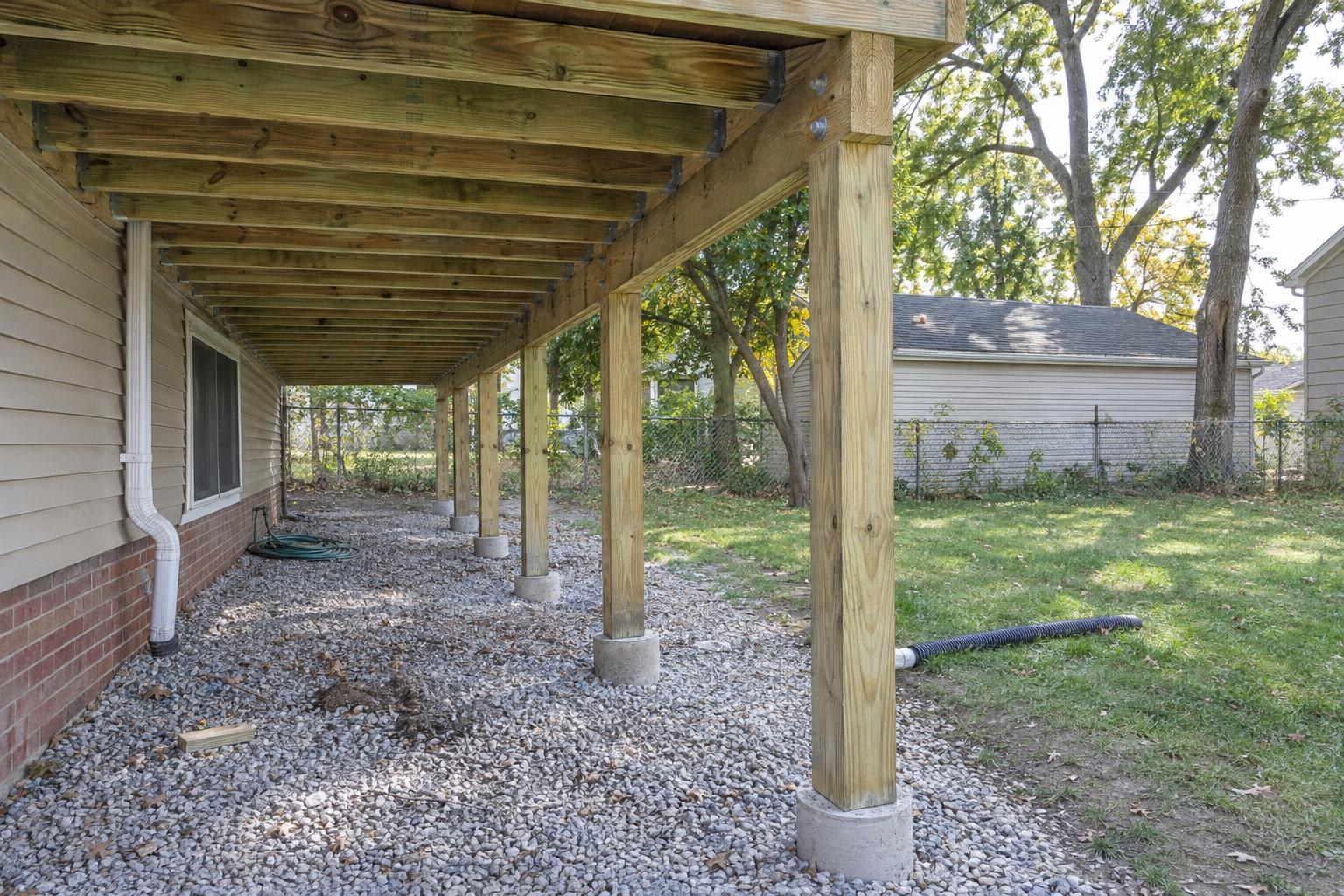
Palatine gets roughly 35 to 40 freeze-thaw cycles a year, and the clay soil under most lots here swells when it's wet and shrinks when it dries out. That combination is why deck footings in this part of Cook County have to go down at least 42 inches, below the frost line, or the ground will heave them over a winter or two. A builder who doesn't bring this up unprompted either doesn't know it or is hoping you won't ask. Either way, that's your first filter before you ever look at a portfolio photo.
Ask about permits before you ask about price
The Village of Palatine requires a permit for most deck work, attached decks especially, and for anything more than 30 inches off grade. The inspector will want to see the footing depth before it gets poured over, the ledger board attachment to the house, and the railing height and baluster spacing once it's framed. A contractor who tells you "we don't usually pull permits for decks" is telling you they either cut corners regularly or they're hoping the inspection step gets skipped. Either way, you're the one who owns that liability once the paperwork gets traced back to the address, not them.
If your lot backs onto a subdivision built after the 1990s, like some of the newer streets off Hicks Road or Dundee, there's a decent chance you're in an HOA with its own setback and material rules on top of the village code. Older streets closer to downtown Palatine, built in the 50s and 60s, usually don't have that layer, but they're more likely to have an old concrete patio or a buried oil tank where you want to dig, so a good builder will ask about what's already under the yard before they ask about board color.
The ledger board is where most failures start
If you remember one thing from this post, make it this: more deck collapses trace back to a poorly attached ledger board than to anything else on the structure. The ledger is the board bolted to your house that the whole deck hangs off of. It needs to be through-bolted or lag-bolted into the rim joist or framing, not just nailed, and it needs flashing above it so water doesn't track behind the siding and rot the house framing from the inside. Ask a builder how they attach and flash the ledger. If the answer is vague, or if they say nailing is fine, that's a walk-away moment, not a maybe.
The same logic applies to joist hangers, post bases, and the connection between posts and beams. Galvanized or stainless hardware rated for ground contact is not optional here. Illinois winters put salt and moisture into that framing cavity every year, and cheap hardware rusts out in five or six years instead of lasting the 25-plus years a deck's structure should.
Material knowledge separates the builders worth hiring
Pressure-treated pine is still the most common structural lumber for framing, and it's fine for that, but it's not meant to be a finished surface forever without maintenance. Composite decking has gotten a lot better over the last ten years and doesn't need staining, but it still expands and contracts with heat, and a builder who doesn't leave the manufacturer's gap spacing between boards will have a deck that buckles by its second summer. Cedar and other wood species look good but need to be stained or sealed every two to three years in this climate, more often on a south-facing deck that gets direct sun most of the day.
Ask what fasteners they use with composite boards specifically, since some composite brands void their warranty if you use the wrong screw or clip system. A builder who can explain the difference between hidden fastener systems and face-screwing, and tell you which one their supplier recommends for the brand they're installing, has actually done this work. One who shrugs and says "composite's composite" probably hasn't installed much of it.
Water and grading matter more than people think
A lot of Palatine lots have only a gentle slope away from the house, and clay soil doesn't drain fast. If a deck gets built without thinking about where water goes underneath it, you end up with standing water against the posts and footings for days after a heavy summer downpour. A builder who's done this long enough will grade under the deck slightly and keep post bases above grade, not buried in a low spot. If you're adding a screened-in porch or a pergola with a solid roof, ask where that runoff goes. Redirecting water onto a neighbor's yard, even by accident, has caused more than one dispute between neighbors on these older blocks.
What to walk away from
- A bid that's thousands less than every other quote. Someone's cutting lumber grade, footing depth, or hardware to hit that number.
- No certificate of insurance. Ask for it directly, don't take their word.
- A verbal agreement instead of a written contract with board specs, fastener type, footing depth, and a payment schedule tied to completed stages, not one big deposit up front.
- Reluctance to pull a permit, or a claim that it isn't needed.
- No answer, or a vague one, when you ask how the ledger will be flashed.
A reasonable payment structure is something like a third down, a third at framing, and the balance at final inspection. If someone wants most of the money before they've dug a single footing, that's a sign to keep looking.
What a good conversation sounds like
You should come away from a first meeting knowing the footing depth they plan to use, how they'll flash the ledger, what fastener system goes with whichever decking you pick, and roughly how many weeks out they're booking given the season. Spring and early summer are the busy months here, so a builder with a six to eight week lead time in April isn't necessarily a bad sign, it's just the calendar. One who can start tomorrow in peak season is worth a second look at why nobody else has them booked.
If you want to see how that conversation plays out in practice, our deck builder work around Palatine covers everything from new builds to repairing decks that were framed wrong the first time.